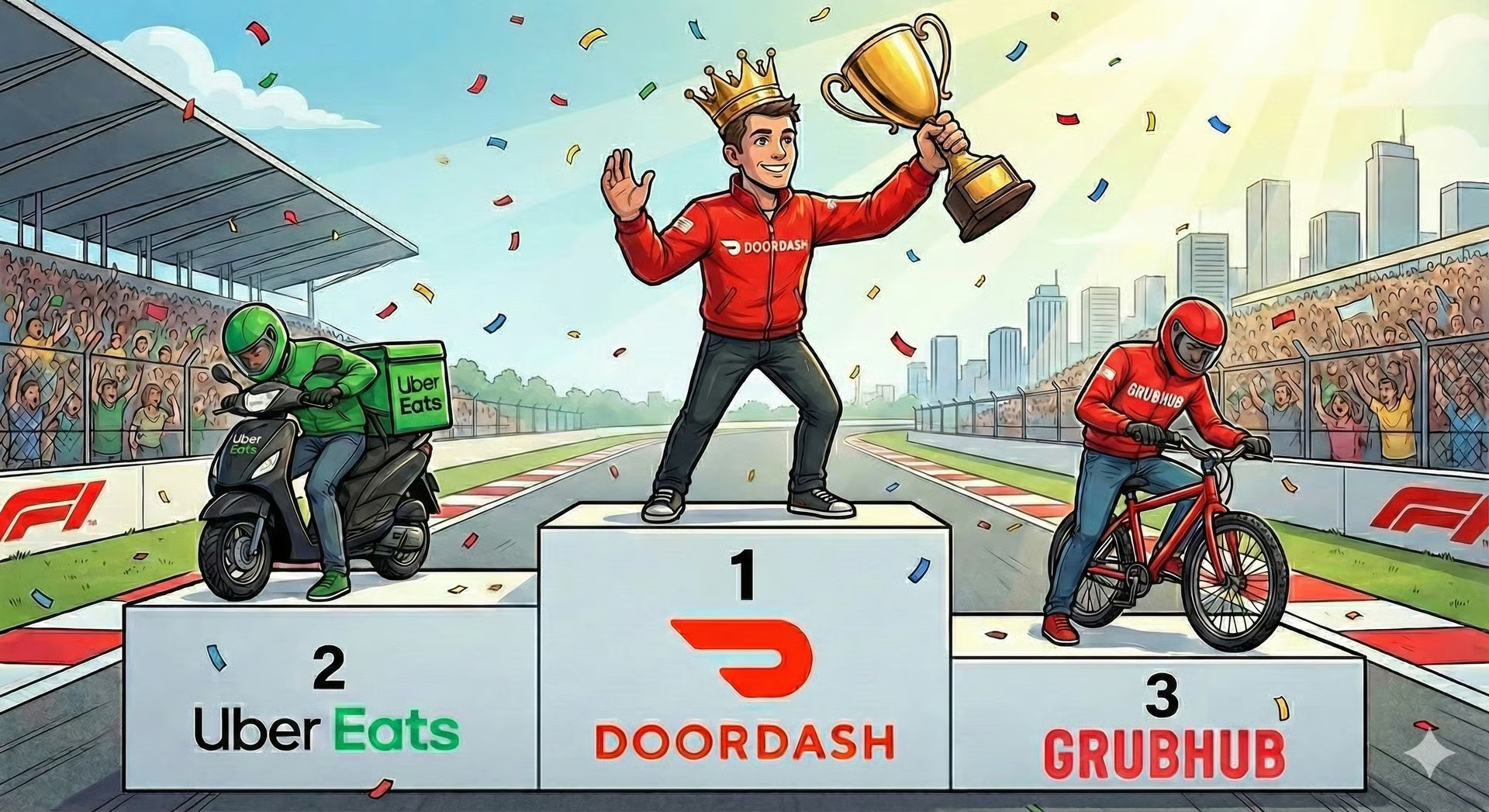
DoorDash Nearly Died Twice, then Won the Food Delivery War
Feb 2, 2026 · 2 min read
In 2017, DoorDash was a distant third in food delivery. By 2020, they dominated the market. How?
Strategy: Three Key Decisions
First, DoorDash recognized that owning delivery logistics unlocked restaurant supply. They built a network of independent drivers who could deliver for any restaurant. Grubhub just routed orders to restaurants. Uber Eats started with pre-made meals in cars. DoorDash built the logistics-first model everyone uses now.
Second, they launched in suburbs, not cities. Worse alternatives, more affluent customers, higher order values, and zero competition. They took over key markets while competitors fought over metropolitan cities like San Francisco and New York City.
Third, they prioritized restaurant selection over speed and price. As long as delivery took ~40 minutes, customers were happy. Wide selection mattered more than being 5 minutes faster.
Execution: Relentless Speed
DoorDash nearly died twice: down rounds in 2016, almost out of cash in 2017. They survived through obsessive execution. Better reliability. Cleaner app. Features like dasher tracking before anyone else, and DashPass before Uber Rewards.
Luck: Perfect Timing
From 2018–2019, Grubhub was public and couldn't afford to burn cash pivoting models. Uber was recovering from scandals and an IPO, forced to cut spending.
DoorDash? Raised $1.8 billion and burned $475M in 2019 alone, resulting in negative 54% EBITDA margins only a private company could pull off. They 5x'd their market footprint in 2018 and spent $3B on marketing from 2019–2021.
When COVID hit in 2020, DoorDash was already winning. The pandemic only cemented their lead. Today, DoorDash holds nearly 67% of the U.S. food delivery market.